Introduction
We understand that you are facing a decision bound up with pain and with many questions. Choosing a resting place for a loved one is one of the hardest matters to deal with after a loss. More and more families in Poland are considering urn burial in a columbarium — a dignified, economical option that requires less upkeep than a traditional grave. We want this article to help you calmly compare the choices and reach a decision that reflects both your own means and the wishes of the person who has died.
The columbarium is a subject that raises many uncertainties. How much does a niche cost? For how long is the fee paid? Who may rest in it, and what documents need to be prepared? These are practical questions worth knowing the answers to before you go to the cemetery office. There are no wrong choices here — every way of remembering a loved one is equally full of respect.
In this article we explain what a columbarium is, present the current niche prices for 2026 according to the price lists of municipal cemetery boards (Warsaw, Krakow, Wroclaw, Poznan), and set out the rules of interment, the payment period and the required documents. You will find a comparison table of prices with the cities and sources given, along with answers to the most frequently asked questions. Let us note the most important point straight away: prices differ between municipalities — there is no single, nationwide rate.
Alongside the physical niche, more and more families choose to create a digital memorial, which complements the resting place with a memory page accessible from anywhere in the world. You will find details of the available plans on the Kinmory website.
What is a columbarium?
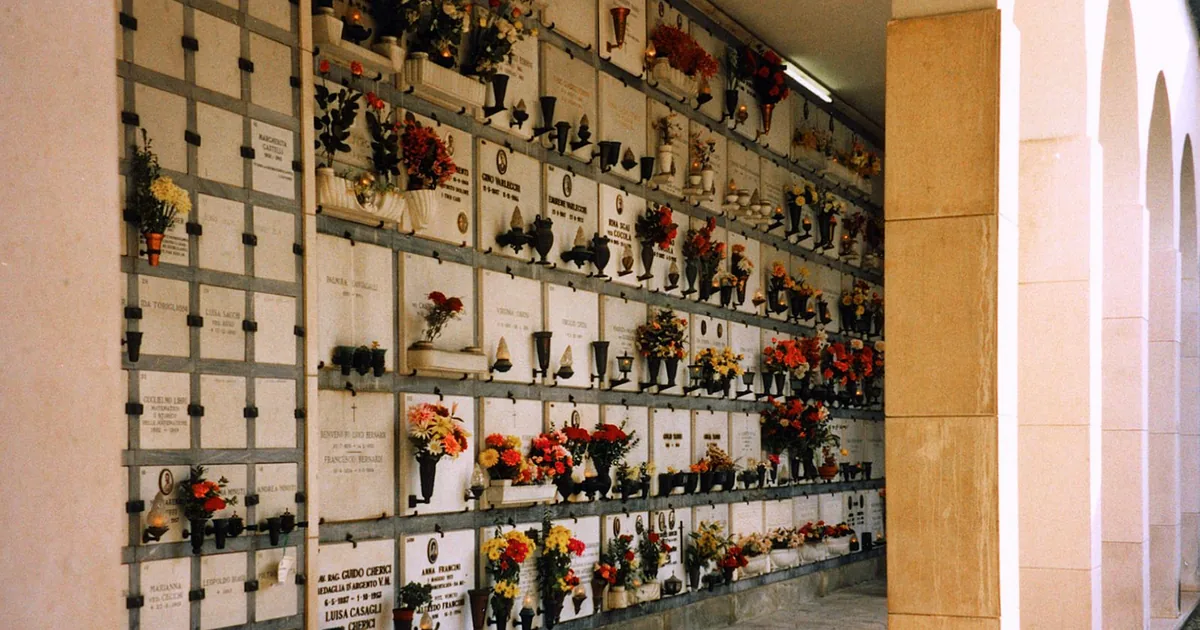
A columbarium is a structure — free-standing or built into a wall — with niches designed solely for urns holding the ashes of people cremated after death. No coffins are placed in it, only urns. Each niche is closed with a plate (most often granite) bearing an inscription with the deceased's forename, surname and dates of life. Columbaria are built mainly at municipal cemeteries, and increasingly at parish ones too.
The name comes from the Latin word columbarium, which originally meant a dovecote — a structure with many recesses. Modern columbaria take the form of walls, columns or small buildings in which the individual niches are arranged in rows, one above another. It is a solution that has long been known in Poland, but its popularity is clearly growing as cremation becomes more widespread.
Why columbaria are growing in popularity
The rising interest in urn niches is directly linked to the growing number of cremations. According to industry estimates, cremation already accounts for around 40% of all funerals in Poland, and in large cities the proportion can be even higher. After a body has been cremated, families face the question of where to place the urn — and increasingly they choose a columbarium.
The main reasons for choosing a columbarium niche:
- Lower cost than buying a plot for a traditional earth grave together with a headstone
- Fewer maintenance obligations — there is no grave to tend and no stone headstone to fund
- Space savings at the cemetery — niches take up far less area, which matters in cities with a limited number of free plots
- A dignified, elegant form — modern columbaria are well kept and blend harmoniously into the cemetery grounds
- Easier access — niches are often located in easily reachable avenues
Types of niche
Niches differ above all in capacity. A single niche holds one urn, while a family niche holds between two and four urns — allowing the ashes of several family members to be placed side by side. Some cemeteries also offer vertical and horizontal niches, differing in layout and price. When choosing, it is worth asking the cemetery management board about the available variants and about how many urns may ultimately be placed in a given niche.
Columbarium niche prices in 2026
The price of a columbarium niche in 2026 depends above all on the city and the specific cemetery — it ranges from around PLN 2,000 to as much as PLN 15,000. The size of the fee is determined by: the niche's capacity (single or multiple), the cemetery's location and the period for which the fee is paid (from 20 to 100 years). There is no single nationwide rate — each municipal cemetery board sets its own price list.
Below we present specific figures from the official price lists of municipal cemetery boards for 2026. Please bear in mind that these are the fees for the niche alone — additional costs may be added for the burial, such as making and fitting the inscribed plate.
Warsaw
At municipal cemeteries in Warsaw, the fee for a columbarium niche at the Northern Municipal Cemetery (Cmentarz Komunalny Północny) is PLN 5,100, paid for a period of 20 years (source: Warsaw Municipal Cemetery Board). This is a single flat rate per niche, regardless of its position and size. By way of comparison — an earth urn grave in Warsaw costs from PLN 1,060 for 20 years.
Krakow
In Krakow a single price list applies across all municipal cemeteries. Securing the use of an urn niche costs PLN 3,777 for 30 years, and renewing the use (prolongata) for a further 20 years costs PLN 2,496 (source: Krakow Municipal Cemetery Board). Krakow therefore offers a longer basic payment period than most Polish cities.
Wroclaw
Wroclaw stands out nationally with an exceptionally long, 100-year period of niche use. Under the price list in force from 19 March 2026 (Ordinance No. 4493/26 of the Mayor of Wroclaw), the fee for interment in an urn niche ranges from PLN 6,000 (smaller niches) to PLN 15,000 (large horizontal family niches), depending on the cemetery and the type of niche (source: Wroclaw Municipal Cemetery Board). Niches at the Grabiszyn and Osobowice cemeteries cost PLN 10,000, and at Psie Pole PLN 8,000.
Poznan
In Poznan the fee for a columbarium niche is paid for 25 years. A single niche costs around PLN 2,000, a double one around PLN 3,500, and a four-place family niche around PLN 5,500. Poznan is among the cities with some of the most affordable single-niche prices in Poland.
Table of columbarium niche prices by city
The table below sets out the columbarium niche fees in Poland's largest cities in 2026. The amounts relate to the niche alone and differ in the period for which the fee is paid.
| City | Niche price | Payment period | Source |
|---|---|---|---|
| Krakow | PLN 3,777 | 30 years | ZCK Krakow (2026 price list) |
| Warsaw (North) | PLN 5,100 | 20 years | ZCK Warsaw (2026 price list) |
| Wroclaw | PLN 6,000–15,000 | 100 years | ZCK Wroclaw (from 19.03.2026) |
| Poznan | PLN 2,000–5,500 | 25 years | municipal price list (2026) |
Indicative prices, current as of July 2026. The exact rates are set by the management board of the given cemetery — they should be verified in the official price list or directly at the cemetery office.
As you can see, the differences are considerable — not only in the amount, but also in the length of the payment period. A niche in Wroclaw is more expensive, but the fee covers as much as 100 years, whereas in Warsaw it covers 20. When comparing offers, it is always worth weighing the price against the period for which it is paid. If you are interested in the wider costs of a burial plot, we recommend our article on cemetery plot prices and leases.
Did you know? As with a traditional headstone, a digital memorial with a QR code can be added to a columbarium niche. A small plaque bearing the code, placed on the plate, lets visitors scan it with a smartphone and see a photo gallery, memories and the life story of a loved one.
Rules for interment in a columbarium
Only an urn holding the ashes of a person cremated after death is placed in a columbarium niche — never a coffin. The right to manage the niche belongs to the person who signed the contract with the cemetery management board, usually the deceased's closest family member. A single niche holds one urn, a family niche between two and four. The detailed rules are set out in each cemetery's regulations.
Urn interment in a columbarium proceeds differently from a traditional coffin funeral. The body is first cremated at the crematorium, and the ashes, placed in an urn, are handed to the family or directly to the cemetery management board. Only then does the placing of the urn in the niche take place — often in an intimate setting, in the presence of close relatives, and, at the family's request, with a religious or secular ceremony as well.
Who makes decisions about the niche
The person who signed the contract with the cemetery and paid the fee becomes the niche holder (dysponent niszy). It is they who decide on further interments in a family niche, on the wording of the inscription on the plate, and on renewing the fee in future. In practice, the holder is most often the spouse, a child or another close relative of the deceased. It is worth agreeing within the family in advance who will take on this role, to avoid misunderstandings.
An important legal nuance
It is worth knowing an important distinction that follows from the law. Under the Act of 31 January 1959 on Cemeteries and the Burial of the Dead (Journal of Laws 2025, item 1590, as amended), an earth grave may not be reused before 20 years have passed — and the family may object to this by paying a further fee. Crucially, this provision, in the part concerning reuse, does not cover the burial of urns holding ashes after cremation (Article 7 of the Act). This means that the rules governing an urn niche are set primarily by the civil-law contract and by the regulations of the specific cemetery, rather than by a fixed statutory period. That is why the payment periods for a niche vary — 20, 25, 30, or even 100 years.
The formalities step by step
- Cremation at the crematorium — on the basis of the death card (karta zgonu) noting cremation
- Choosing the cemetery and niche — checking availability and the price list at the cemetery management office
- Signing the contract and paying the niche fee for a set period
- Placing the urn in the niche on the agreed date
- Making the plate with the inscription — usually by a stonemason's workshop or as part of the cemetery's service
Payment period and niche renewal
The fee for a columbarium niche is paid in advance for a set time — most often 20 years, though this period depends on the cemetery's regulations and can be longer (Poznan 25 years, Krakow 30 years, Wroclaw 100 years). Once this time has passed, the fee must be renewed (prolongata). Failure to renew means that, after a certain period, the cemetery management board may reallocate the niche for reuse.
This is one of the most important points that families often forget. The niche fee is not a one-off, lifelong payment — it is paid for a period that will one day come to an end. It is worth noting the fee's expiry date in the family calendar and renewing it in good time.
How renewal (prolongata) works
Renewing the fee involves paying a further amount at the cemetery management office before the end of the period for which the niche was purchased. The cost of renewal can be lower than the original fee — for example, in Krakow renewing the use of a niche for a further 20 years costs PLN 2,496, whereas the first fee for 30 years is PLN 3,777 (source: ZCK Krakow).
The cemetery management board should notify the family of the approaching deadline, but in practice the duty to keep track of the date rests with the niche holder. If the fee is not renewed, the niche may — once the relevant procedures have been completed — be reallocated for reuse, and the urn moved to a communal burial place.
A practical tip
We recommend that, when signing the contract, you ask the cemetery management board for written confirmation of the fee's expiry date and for an explanation of the renewal procedure. It is also worth deciding who in the family will be responsible for keeping track of the deadline and passing this knowledge on to later generations.
Required documents
Three basic documents are needed to inter an urn in a columbarium: the death certificate (akt zgonu) from the Registry Office (Urząd Stanu Cywilnego), the death card (karta zgonu) noting the place and manner of burial, and a cremation certificate issued by the crematorium. The formalities are completed at the cemetery management office, where the contract is signed and the niche fee is paid.
Preparing the documents can be an additional burden for a family in mourning, so it is worth knowing in advance exactly what will be required. Below we explain where each document comes from.
List of documents
- Death card (karta zgonu) — issued by the doctor certifying the death; it is the basis both for cremation and for burial
- Death certificate (akt zgonu) — drawn up by the head of the Registry Office for the place of death; the family receives the copies needed for further formalities
- Cremation certificate — issued by the crematorium after the body has been cremated; it confirms that the urn contains the ashes of a specific person
- Application to the cemetery management board — submitted at the cemetery office together with the above documents; the niche contract is signed on its basis
For detailed information on how to obtain a death certificate and what formalities must be completed after the death of a loved one, see our articles on obtaining a death certificate and on the formalities after a death.
Financial support
A family arranging a burial — including an urn burial in a columbarium — may apply for the funeral allowance (zasiłek pogrzebowy) from ZUS. This benefit partly covers the funeral costs, including the niche fee. We describe the rules, the amount and how to apply for the benefit in detail in our article on the ZUS funeral allowance.
Columbarium vs a traditional grave — comparison
A columbarium is usually cheaper and requires less upkeep than a traditional earth grave with a headstone, but it entails prior cremation and offers less scope for individual ornamentation. The choice between a niche and an earth grave is a personal one, best made with regard to the wishes of the deceased, family tradition and financial means.
The comparison below will help you weigh the two options against the most important features. Please remember that no choice is 'better' or 'worse' — each is an equally dignified way of remembering a loved one.
| Feature | Columbarium (niche) | Earth grave with headstone |
|---|---|---|
| Requires cremation | Yes | No (coffin burial possible) |
| Cost of the plot | PLN 2,000–15,000 | PLN 1,000–6,000 (plot alone) |
| Cost of headstone/plate | PLN 500–2,000 (niche plate) | PLN 6,000–16,000 (headstone) |
| Upkeep | Minimal | Regular tending |
| Area occupied | Very small | Standard (approx. 2 m²) |
| Payment period | 20–100 years (depending on the city) | 20 years (renewable) |
| Scope for ornamentation | Limited (plate, inscription) | Extensive (sculptures, kerbing) |
If you are considering cremation as the first step towards an urn burial, we encourage you to read our article on the cremation procedure and costs in Poland and our comparison of cremation with traditional burial. It is also worth remembering that an alternative to a niche is a small urn headstone on an earth grave — we cover its prices in our article on the cost of a headstone.
Frequently asked questions
What is a columbarium?
A columbarium is a free-standing or wall-mounted structure with niches designed solely for urns holding ashes after cremation. No coffins are placed in it. Each niche is closed with an inscribed plate. Columbaria are found mainly at municipal cemeteries, and increasingly at parish ones too.
How much does a columbarium niche cost in 2026?
The price depends on the municipality and the cemetery. In Krakow an urn niche costs PLN 3,777 for 30 years, in Warsaw PLN 5,100 for 20 years, in Poznan from PLN 2,000 for 25 years, and in Wroclaw from PLN 6,000 to 15,000 for 100 years. These are 2026 municipal price-list figures.
For how many years is the niche fee paid?
The standard period is 20 years, as with a traditional grave, but it depends on each cemetery's regulations. Krakow offers 30 years, Poznan 25 years, and Wroclaw as much as 100 years. Once the period ends the fee must be renewed (prolongata), otherwise the niche may be reallocated for reuse.
Who may be interred in a columbarium niche?
Only an urn holding the ashes of a person cremated after death is placed in a niche. A single niche holds one urn, a family niche between two and four urns. The right to manage the niche belongs to the person who signed the contract with the cemetery management board — usually the deceased's closest family.
What documents are needed for interment in a columbarium?
You need: the death certificate (akt zgonu) from the Registry Office, the death card (karta zgonu) noting the place of burial, and a cremation certificate from the crematorium. The formalities are completed at the cemetery management office, where the contract is signed and the niche fee is paid.
Summary
- A columbarium is a structure with niches designed solely for urns holding ashes after cremation — no coffins are placed in it
- Niche prices in 2026 differ between municipalities: Poznan from PLN 2,000 (25 years), Krakow PLN 3,777 (30 years), Warsaw PLN 5,100 (20 years), Wroclaw PLN 6,000–15,000 (100 years)
- There is no single nationwide rate — each municipal cemetery board sets its own price list, which should be verified at the cemetery office
- The fee is paid for a set time (most often 20 years) and, once it ends, must be renewed (prolongata) — the fee is not lifelong
- Only an urn is placed in a niche; a single niche holds one urn, a family niche between two and four
- The required documents are: the death certificate, the death card, and a cremation certificate from the crematorium
- A columbarium is usually cheaper and less demanding to maintain than a traditional grave with a headstone, but it requires prior cremation
- The family may apply for the ZUS funeral allowance, which partly covers the cost of an urn burial
The prices and information given in this article are indicative and current as of July 2026. The actual rates are set by the management board of the given cemetery — they should be confirmed in the official price list. Sources: ZCK Warsaw, ZCK Krakow, ZCK Wroclaw, the Act on Cemeteries and the Burial of the Dead (Journal of Laws 2025, item 1590, as amended).
Related articles
- Cemetery plot — prices and leases in 2026 — How much a burial plot costs and how the lease fee works
- Cremation in Poland — procedure, cost and formalities — Everything about cremation: from the procedure to the costs, the step before an urn burial
- How much does a gravestone cost in 2026? — Prices of headstones and plates, including urn monuments, by material
Add a QR code to the headstone — visitors will see photos and a life story
The plate on a columbarium niche holds a name and dates. A QR code placed on the plate opens up far more — a photo gallery, a biography and memories from loved ones. You can order a QR plaque from Kinmory and place it at any resting place, whatever its form.
Order a QR code for the headstone — Kinmory